Parivahan Sewa is India’s centralized digital transport services platform. It manages driving licence records, vehicle registration data, and traffic enforcement systems under one structured framework. The system operates under the supervision of the Ministry of Road Transport and Highways.
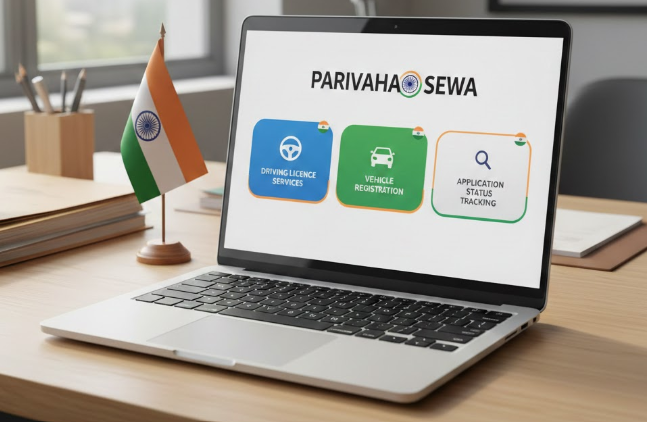
If you are searching for parivahan sewa portal, parivahan sewa driving licence, sarathi parivahan sewa, or parivahan sewa up, you are interacting with different layers of the same national system.
Understanding how these layers work together makes the process smoother and faster.
Parivahan Sewa
Parivahan Sewa is more than a website. It is a national transport database architecture.
Before its launch, RTO services were fragmented. Each state maintained its own records. As a result, cross-state verification was slow and inconsistent.
However, Parivahan Sewa changed that structure.
Today, the system connects state-level RTO databases into one standardized national framework. While states still control approvals, the data model remains unified.
This balance ensures:
- Standardization
- Transparency
- Faster verification
- Reduced duplication
In short, Parivahan Sewa creates consistency across India’s transport administration.
Parivahan Sewa Portal
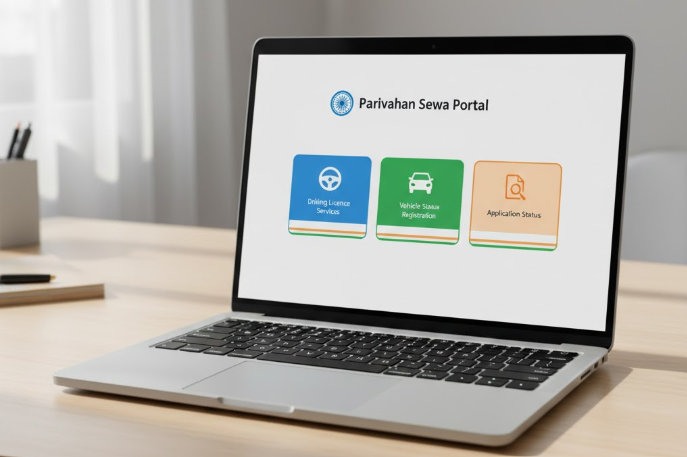
The Parivahan Sewa portal is the public interface of the system. It acts as the gateway to all online RTO-related services.
When users access the portal, they must first select their state. This step is important because execution authority remains at state level.
The portal is divided into two main sections:
- Driving Licence Services
- Vehicle Services
Each section connects to a different backend system.
Driving licence requests go through Sarathi.
Vehicle-related services go through Vahan.
This separation keeps workflows organized and efficient.
Parivahan Sewa Driving Licence Services
Search traffic shows that Parivahan Sewa driving licence is one of the most requested services.
Licence operations are processed through the Sarathi module. However, the application begins on the Parivahan portal.
Learner Licence
The learner licence process includes identity verification, eligibility validation, and test scheduling.
First, applicants submit their details online. Then, they upload required documents. After payment, they book a learner test slot.
Some states allow online learner tests. Others require a physical RTO visit. The availability depends on state implementation.
Therefore, always check your state-specific instructions before scheduling.
Permanent Driving Licence
After holding a learner licence for the required period, applicants can apply for a permanent licence.
This stage includes:
- Driving test appointment
- Biometric verification
- Final approval
Once approved, the licence becomes part of the national Sarathi database.
Because the system is centralized, the record remains valid across states.
Licence Renewal and Corrections
Renewals follow a structured validation process. The system cross-checks existing data before approving updates.
Similarly, corrections such as name or address changes require supporting documentation. If details do not match identity records, the application may be delayed.
Accuracy is essential.
Sarathi Parivahan Sewa
Sarathi Parivahan Sewa is the driving licence management engine inside the broader Parivahan system.
It handles:
- Licence issuance
- Renewals
- Duplicate licences
- Class endorsements
- International Driving Permits
Sarathi maintains a centralized licence registry. As a result, duplicate or fraudulent licences are significantly reduced.
For example, if a driver relocates from one state to another, Sarathi allows record verification without restarting the process.
This is particularly useful for commercial drivers and interstate transport operators.
Vehicle Services Under Parivahan Sewa
Vehicle-related workflows operate through the Vahan subsystem.
Common searches include:
- parivahan sewa rc status
- vehicle owner details
- rc transfer online
- hypothecation removal
The Vahan database manages all registration-related records.
RC Status Check
Users can verify vehicle registration details online. This feature is especially useful when purchasing a used vehicle.
Before finalizing a transaction, buyers can check:
- Registration validity
- Insurance status
- Pollution certificate validity
This improves transparency and reduces risk.
Ownership Transfer
Ownership transfer requires more than submitting a form.
The system validates:
- Insurance continuity
- Pending challans
- Existing hypothecation
- Seller verification
Only after validation does the record transfer to the new owner.
Therefore, resolving pending dues beforehand speeds up the process.
e-Challan Services
Parivahan Sewa integrates traffic enforcement data.
When users search for parivahan sewa challan, they access a centralized violation record system.
Users can:
- Check pending fines
- Pay online
- Download payment receipts
Payments update instantly in the database. This prevents future penalties due to administrative delay.
Home Parivahan Sewa
The term home parivahan sewa usually refers to contactless services.
While Parivahan Sewa itself is digital, some states have expanded remote service capabilities.
For example:
- Online learner licence tests
- Remote document verification
- Digital address updates
However, availability varies by state.
Always confirm your state’s supported services before applying.
Parivahan Sewa UP
Uttar Pradesh generates high search volume for transport services.
Through Parivahan Sewa UP, residents can:
- Apply for learner licences
- Schedule driving tests
- Transfer vehicle ownership
- Pay challans
- Update registration details
Although approvals are handled locally, the data remains synchronized with the national database.
This ensures consistency across jurisdictions.
Why Applications Get Delayed
Most delays are caused by user errors rather than system failure.
Common issues include:
- Incorrect state selection
- Mismatched name spelling
- Blurry document uploads
- Missed appointment dates
Therefore, review every detail before submission.
Small inconsistencies can trigger manual review.
Security and Data Protection
Parivahan Sewa uses secure authentication protocols.
These include:
- OTP verification
- Encrypted communication
- Identity-linked validation
Because driving licences and RC records are legal documents, data accuracy is critical.
The centralized structure also reduces fraud and duplication.
How to Use Parivahan Sewa Efficiently
Approach Parivahan Sewa as a structured workflow.
Prepare all documents in advance.
Ensure details match your identity proof.
Select the correct state.
Double-check the summary before final submission.
When information is accurate, the system processes applications predictably.
Parivahan Sewa operates as a national digital transport framework rather than a simple online form portal. Whether you are using Sarathi Parivahan Sewa for a driving licence, checking RC records through Vahan, navigating Parivahan Sewa UP services, or resolving challan payments, the process remains consistent: accurate input leads to efficient approval.
Parivahan Sewa
In addition, Parivahan Sewa operates as a centralized compliance infrastructure rather than a simple digital form system. Every transaction initiated through the platform generates a traceable digital footprint. Therefore, approval workflows follow structured validation protocols instead of discretionary manual processing.
Moreover, the database architecture ensures that licence and vehicle records are synchronized at the national level. When data is updated in one state, it reflects within the broader transport registry. As a result, duplication risks and record inconsistencies are significantly reduced.
Parivahan Sewa Portal
The Parivahan Sewa portal functions through layered user access. While applicants can initiate services directly, backend approval rights remain restricted to authorized RTO officials. This separation maintains regulatory oversight while still offering digital convenience.
Additionally, the portal interface may vary slightly between states. However, the workflow logic remains consistent. Users should always verify state-specific instructions before final submission to prevent avoidable rejection due to documentation mismatches.
Parivahan Sewa Driving Licence
Most application delays under Parivahan Sewa driving licence services occur because of minor data inconsistencies rather than eligibility failure. For example, mismatched spellings between identity proof and application entries often trigger manual verification.
Therefore, applicants should cross-check all demographic fields carefully before submission. Consistency across documents improves processing efficiency and reduces re-appointment scheduling.
Furthermore, after submitting a driving licence request, monitoring SMS and email alerts is essential. The system communicates appointment confirmations, fee acknowledgments, and document clarification notices digitally.
Sarathi Parivahan Sewa
Sarathi Parivahan Sewa strengthens long-term record preservation. Previously, licence files depended on physical storage. Now, digital persistence ensures structured archival and retrieval.
In addition, the Sarathi system supports inter-state licence migration. Individuals relocating for employment or education benefit from centralized data retrieval, which reduces redundant verification procedures.
Home Parivahan Sewa
Home Parivahan Sewa reflects the broader goal of minimizing physical dependency on RTO offices. While biometric services still require in-person presence, many documentation updates and status checks are digitally manageable.
However, service availability differs by state. Therefore, users must confirm whether their selected state module supports remote processing before initiating applications.
Parivahan Sewa UP
Parivahan Sewa UP handles a high transaction volume due to the population scale of Uttar Pradesh. Consequently, structured digital workflow becomes essential for operational stability.
Because the system integrates with the national transport registry, licence verification and vehicle data access remain consistent with other states. This alignment ensures that records processed under Parivahan Sewa UP maintain nationwide validity.
Vehicle Registration Services
Parivahan Sewa vehicle registration services are structured around centralized data validation. Each registration record is mapped to chassis and engine identifiers. Therefore, duplicate entries or manipulated records are systematically filtered during backend verification.
In addition, ownership transfer requests trigger automated compliance checks. Outstanding challans, insurance validity, and tax status are cross-verified before approval. This layered verification model protects both buyers and sellers during ownership transitions.
Applicants should also review uploaded documents for clarity. Blurred scans or incomplete uploads frequently cause processing delays.
Driving Licence Status Check
The Parivahan Sewa driving licence status feature allows applicants to track progress without contacting the RTO directly. This module reduces administrative congestion and improves transparency.
However, status updates may not appear instantly. Backend verification often includes staged approval steps. Therefore, minor delays between submission and visible status change are normal within the system workflow.
For accurate tracking, users must enter application number and date of birth exactly as submitted. Even small formatting errors may prevent retrieval.
RC Status Check
The RC status check under Parivahan Sewa connects directly to the national vehicle registry. Once a registration update is approved, the digital record reflects across integrated enforcement systems.
Moreover, RC status visibility becomes particularly important during resale transactions. Buyers often verify registration authenticity before finalizing purchase decisions.
Regularly reviewing RC status also helps identify unresolved penalties or pending compliance flags that may affect future services.
e-Challan Services
The e-Challan module is integrated with traffic enforcement databases. When a violation is recorded, the challan automatically attaches to the corresponding vehicle record within Parivahan Sewa.
Because of this integration, unpaid fines may restrict certain vehicle-related services. Ownership transfers or registration modifications may be paused until penalties are cleared.
Therefore, periodic challan checks help maintain uninterrupted access to RTO services.
DL Slot Booking
DL slot booking through Sarathi Parivahan Sewa operates on real-time availability. Appointment calendars reflect RTO capacity and regional demand patterns.
Applicants should confirm documentation readiness before booking. Rescheduling due to incomplete paperwork may result in extended waiting periods, especially in high-demand districts.
Additionally, early booking is advisable in metropolitan regions where test slots fill quickly.
Learner Licence Services
Learner licence applications under Parivahan Sewa follow a structured digital workflow. Applicants first complete online form submission and fee payment before scheduling the knowledge test.
The system includes digital test preparation resources in certain states. However, question formats and language options may vary. Therefore, reviewing state-specific instructions improves preparedness.
After successful completion, the learner licence record becomes digitally accessible within the applicant’s profile.
Duplicate Driving Licence
Duplicate driving licence services are available in cases of loss, damage, or data correction. The Parivahan Sewa system verifies existing licence records before permitting reissue.
Applicants may be required to upload a self-declaration or FIR copy depending on state rules. Hence, reviewing documentation guidelines prior to submission prevents unnecessary rejections.
Because records are centralized, duplicate issuance does not create parallel entries within the database.
Address Change in Driving Licence
Address update requests require documentary proof of the new residence. The Sarathi Parivahan Sewa module validates uploaded documents before forwarding the application for approval.
In many states, biometric confirmation may still be necessary. Therefore, applicants should confirm whether physical verification is mandatory in their region.
Once approved, the updated address reflects in the digital licence record and future verifications.
Application Status Parivahan: How to Track Your Request Efficiently
One of the most searched features within Parivahan Sewa is the ability to check application status. Whether it relates to a driving licence request, vehicle registration update, hypothecation removal, or duplicate RC issuance, tracking progress is essential.
The application status Parivahan module is designed to provide structured transparency. Instead of contacting the RTO repeatedly, applicants can monitor workflow stages directly through the portal.
However, understanding how status tracking works prevents confusion.
What Does Application Status Mean in Parivahan Sewa?
In the Parivahan Sewa ecosystem, application status reflects the processing stage of a submitted request. It does not always mean approval or rejection. Instead, it indicates where the request currently sits within the validation chain.
For example, a driving licence request may show:
-
Application Submitted
-
Documents Verified
-
Pending Approval
-
Approved
-
Dispatched
Each stage corresponds to a backend action performed by authorized officials. Therefore, minor waiting periods between stages are normal.
How to Know Your Application Status in Parivahan
Users frequently search “know your application status” when they want real-time clarity. Within Parivahan Sewa, status tracking requires specific input details, typically:
-
Application number
-
Date of birth or registered mobile number
Accuracy is critical. Even small input mismatches can prevent retrieval of status data.
Once entered correctly, the parivahan application status page displays structured information. In some cases, it may also show pending document requirements or payment confirmations.
Vahan Application Status for Vehicle Services
For vehicle-related services, tracking operates under the Vahan database module. Therefore, users searching for vahan application status are typically checking progress for:
-
RC transfer
-
Address correction
-
Hypothecation entry or removal
-
Duplicate RC
-
Fancy number allocation
The Vahan application status section pulls data directly from the vehicle registry. Because of this integration, updates reflect official backend movement rather than estimated timelines.
If a vehicle application remains unchanged for several days, it often indicates pending manual verification at the RTO level.
Why Parivahan Application Status Sometimes Appears Delayed
Applicants occasionally assume system malfunction when no update appears immediately. However, status progression depends on administrative review cycles.
In many states, digital submission is followed by human validation. Therefore, the application status Parivahan tracker may show “Under Process” until documentation is formally verified.
Additionally, high-volume states such as Uttar Pradesh may experience longer review intervals during peak periods. This does not mean rejection. It simply reflects processing workload.
Best Practices When Checking Application Status
To use Parivahan Sewa efficiently, consider a structured tracking approach:
First, wait at least 24–48 hours after submission before checking application status. Immediate checks may not reflect backend entry confirmation.
Second, ensure that all required documents were uploaded clearly. Incomplete submissions often pause status progression.
Third, monitor SMS notifications. In many cases, the system communicates updates before the portal reflects them.
Finally, if status remains unchanged beyond reasonable processing time, contact the respective RTO with your application number.
Why Application Status Tracking Matters
The ability to check parivahan application status strengthens transparency. It reduces physical visits. It also minimizes uncertainty during critical processes such as licence renewal or vehicle ownership transfer.
More importantly, structured status tracking encourages compliance awareness. Applicants become more attentive to documentation accuracy and regulatory requirements.
In practical terms, the application status feature transforms Parivahan Sewa from a submission portal into a process-monitoring system.
And because status tracking integrates with both Sarathi and Vahan modules, it remains one of the most strategically important features within the entire Parivahan Sewa ecosystem.